Collab / Franchise / MT Method: Know-How
Don't copy the drills.
Understand the system.
Mental Tennis know-how turns principles, protocols and on-court experience into a transferable method.
A copied drill works once. An understood principle works every time.
The chain repeats: it doesn't end with the drill.
The chain
From principle to application.
Every Mental Tennis drill starts from a principle and ends in an adaptation. Skipping a step is why copied methods stop working after two weeks.
The chain repeats at every work cycle, not once.
What happens in a player's head at that precise moment of the match.
The work sequence that acts on that mechanism, not on everything at once.
The concrete drill, with conditions that make the behaviour surface.
The test under real pressure, where the behaviour actually counts.
Guided observation: what happened, not what you expected to happen.
Adaptation to the individual player. This is where the method becomes theirs.
Choose a step to read what happens at that point in the chain.
What it includes
The material and the logic that holds it together.
Six kinds of material, all built to be used on court and not only read.
Framework
The map connecting the work areas and setting intervention priorities.
Protocols
The work sequences for each area, with entry and exit criteria.
Drills
The on-court drills, with the conditions that make them effective.
Routines
The repeatable behaviours before, during and after the point.
Observation criteria
What to look at to know whether the work is landing, instead of going by feel.
Training tools
The materials with which staff learn and then pass the method on to their players.
The difference
Fragments or system.
Taking the drills
- They work as long as the group stays the same.
- When one player reacts differently, you're stuck.
- You don't know which variable to move.
Understanding the system
- It works with players you've never met.
- You can build the drill you need in that moment.
- You know what you're observing and why.
From theory to court
The method exists
only when it steps on court.
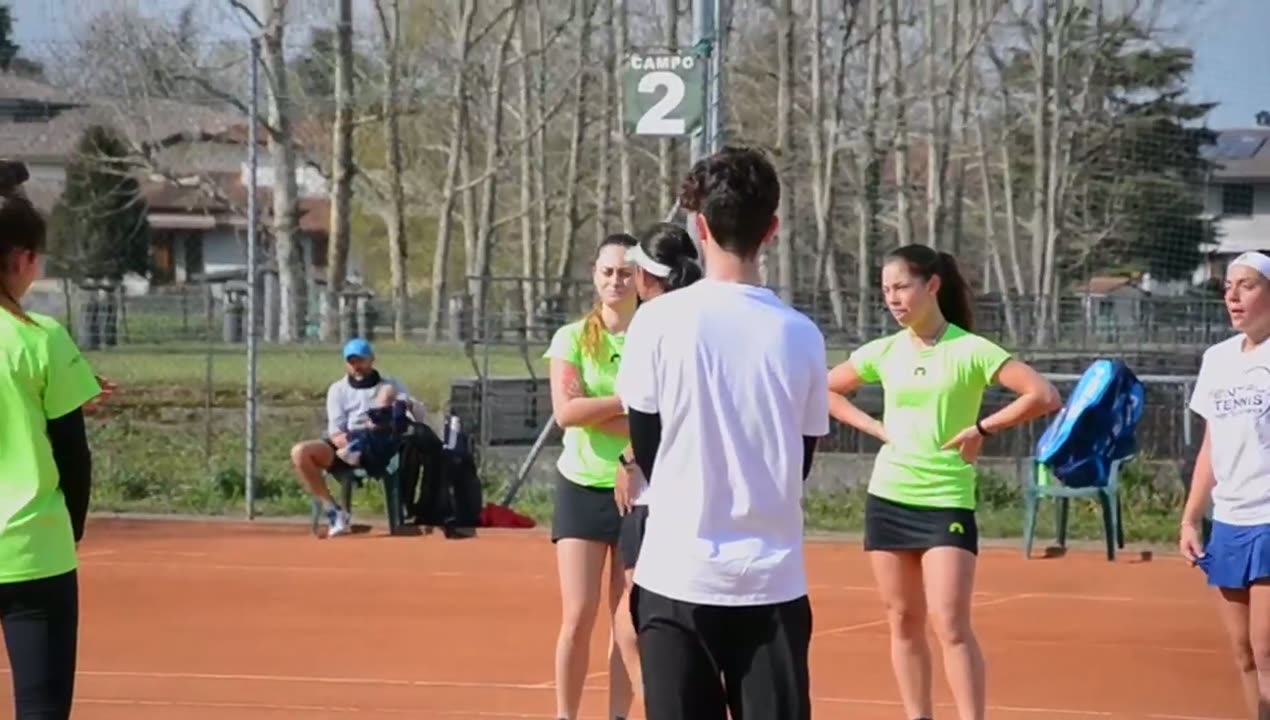
A principle becomes useful when the coach can recognise it, apply it, observe its effects and adapt it to the person in front of them.
That is why Mental Tennis doesn't separate knowledge and application: the method is transferred so it can be used in real work.
One clarification
What this page does not promise.
The know-how is a skills-transfer path, not the purchase of a turnkey licence.
The scope of the collaboration, the materials included and the terms are defined case by case during the conversation: they depend on how many people you train, how many players you follow and how you already work.