Collab / Franchise / Coach & Player Training
Train the coach.
Transform the court.
Training paths to learn how to bring mental work into daily coaching.
A player sees Mental Tennis for one week. Their coach sees them all year. That's why training the people who coach multiplies the method's effect more than anything else.
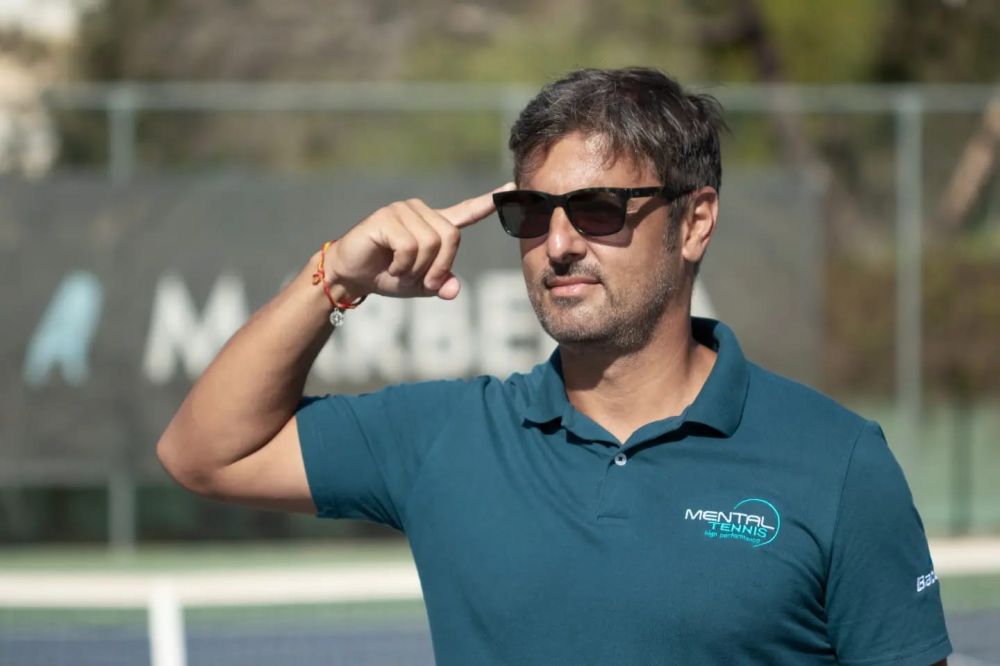
The point
The coach sees the shot.
We teach them to read what comes before it.
- The forehand two metres long is the effect, not the cause.
- The cause arrived three points earlier, and it was visible.
- A trained coach recognises it while it's happening.
- And can intervene before the set is decided.
Observing better is already coaching better.
Reading sequence
The person on court, with what they bring into the match that day.
What is visible: posture, timing between points, reactions.
Looking at it with a criterion, not with an impression.
What produced that behaviour, which often started earlier.
The decision: act now, act later, or say nothing.
Training framework
Six skills, in sequence.
These are the skills a coach develops during the path. The order matters: you can't intervene well on something you haven't learned to observe.
Observe
What to watch in a player beyond technique: posture, timing, reactions.
Interpret
Telling a drop in attention apart from a tactical or a technical problem.
Intervene
When to speak and when to stay quiet. Often it's the second.
Train
Building the drill that puts the player in that precise condition.
Test
Testing it in a match, where the behaviour is actually worth something.
Review
Reviewing with the player and deciding the next step.
The sequence starts again with every player and every season.
From theory to competition
How the path runs.
Workshop
The theory, cut to the essentials and always tied to real competitive situations.
On-court
On-court work with real players, not simulations between colleagues.
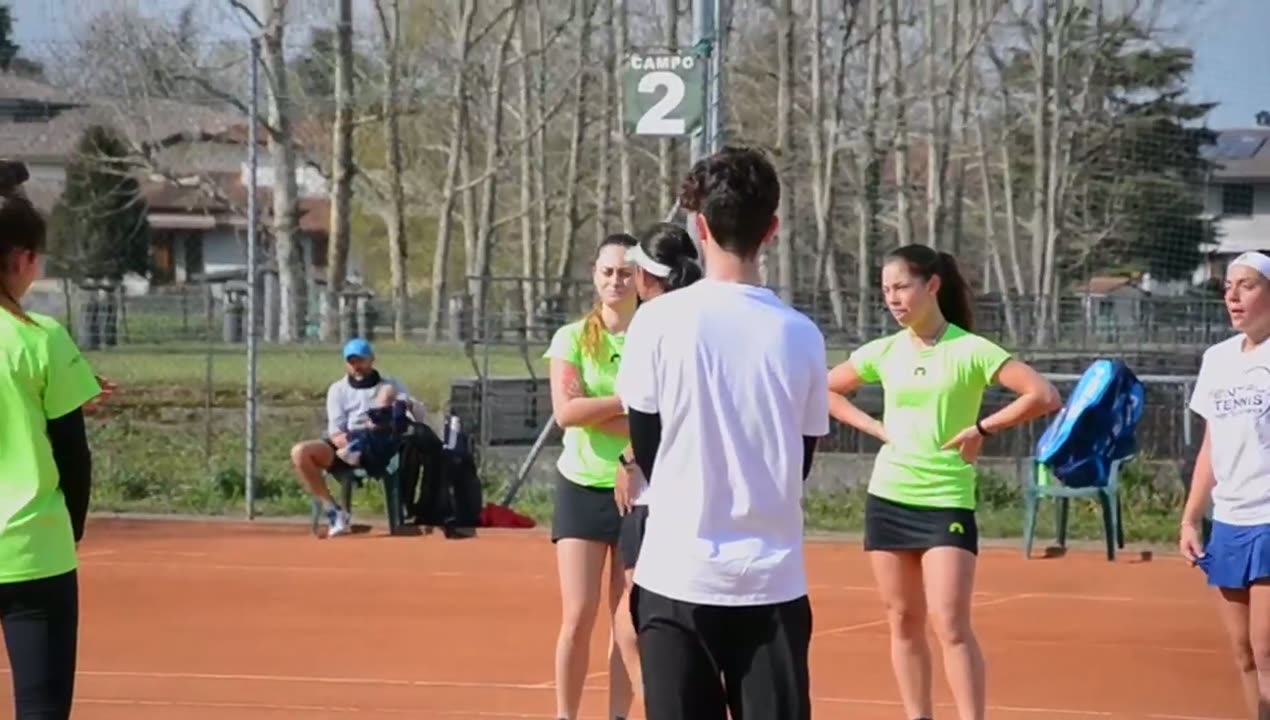
Observation
Observing sessions run by others, with a precise grid of what to look for.
Debrief
Analysis of what happened and of what you chose not to do.
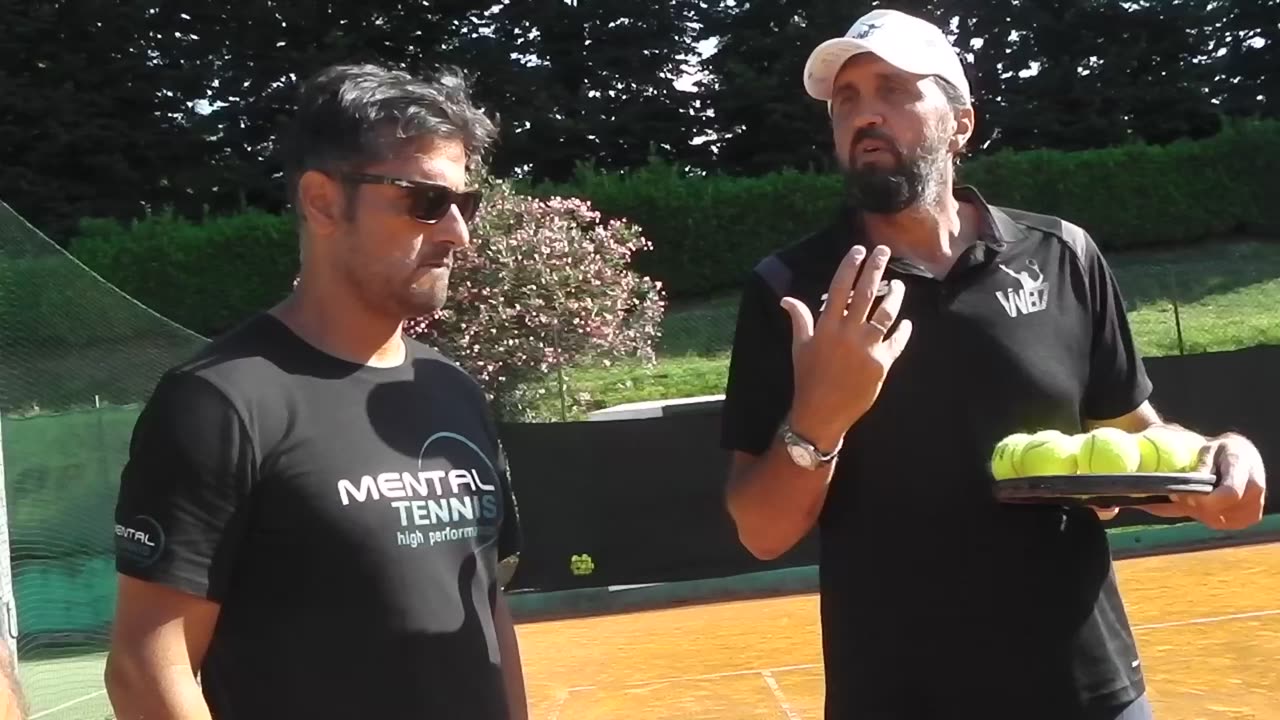
Application
Application in your own context, with your own players, between meetings.
Assessment
The final assessment of the Mental Tennis training path.
Duration, modules and delivery of the training path are defined according to the group and the working context.
What changes
No longer only
“what should I say to the player?”
but: “what should I observe?”
The path doesn't simply add new drills to a coach's repertoire. It works on the way they observe, interpret and decide when to intervene. And this changes the relationship between coach, player and match.
CoachThe coach stops looking for the sentence that fixes it and starts looking for what produced the behaviour.
PlayerThe player is no longer corrected on the shot alone: they are helped to recognise what happens before it.
MatchThe match stops being only a result and becomes the place where what was trained is verified.
Choose an element to see what changes in the relationship.
Filippo helped me improve the way I communicate with athletes — a crucial step towards getting results.
Diego Nargiso — ATP coach
Training
Request the training programme.
Tell us how many you are and which players you work with: we build the path around your context, not around a standard template.